Mastering Visual Presentations with 3D Render Podium Backgrounds
You have the perfect product, the flawless logo, or the groundbreaking idea. You know it is good, but when you try to present it to the world, it falls flat. Standard white backgrounds feel sterile, and busy outdoor scenes distract from your message. This is the friction point where many creators and entrepreneurs struggle. They need a stage—a literal visual platform—that elevates their subject without overshadowing it. This is exactly where the utility of a high-quality 3D render empty mockup white cylinder podium comes into play. It provides that necessary grounding, offering a professional, tangible space for digital assets to live in.
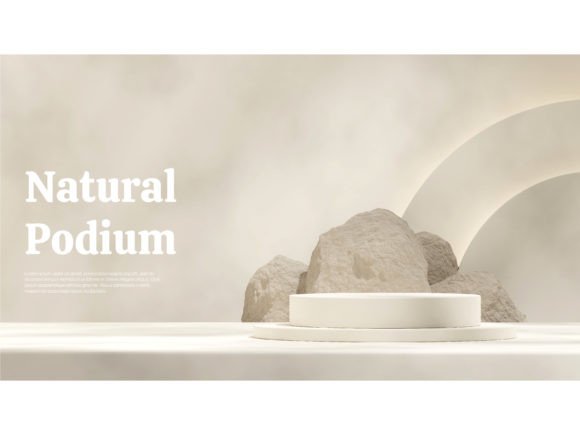
When we look at the specific aesthetic of a white cylinder podium set against a landscape rock background, we are looking at a blend of modern minimalism and organic texture. It is a semi-circle composition, which is crucial for framing. The curve draws the viewer’s eye inward, focusing attention on the center stage. This isn't just a generic stock photo; it is a digital asset designed to solve specific visual problems. Whether you are a designer assembling a brand kit, a blogger needing a hero image, or a small business owner creating an advertisement, understanding how to leverage this specific type of mockup can drastically improve your visual communication.
The Psychology of the Stage: Why the White Podium Works
There is a reason why luxury brands and high-end tech companies often use 3D rendering for their advertising. It offers control. A 3D render podium mockup background removes the chaos of the real world. The white cylinder podium acts as a neutral canvas. In design theory, white space (or negative space) is essential for readability and focus. By placing your subject on a clean white pedestal, you are psychologically signaling importance to the viewer. You are saying, "Look here. This matters."
The inclusion of the landscape rock background adds a layer of sophistication that a plain studio background lacks. It provides depth and context without the clutter. The texture of the rock contrasts beautifully with the smooth, polished surface of the semi-circle podium. This contrast creates visual interest. For a content creator or marketer, this balance is gold. It allows you to overlay text—using the editable text features included in the PSD file—without worrying about legibility issues caused by a chaotic background. The typography you choose, such as the included Calistoga or Archivo fonts, will stand out crisply against this environment.
Practical Applications for Designers and Entrepreneurs
So, you have downloaded the files—PSD and JPG formats—and you are looking at the organized layers. How do you actually use this in the real world? The applications are broader than you might initially think. This asset is not just for displaying 3D objects; it is a versatile foundation for various creative projects.
For logo design and branding, placing a client’s new logo on the white cylinder podium gives the presentation an immediate "product" feel. It transforms a flat vector graphic into something that feels weighty and established. If you are pitching a rebrand, presenting the logo in a 3D environment shows foresight and professionalism. It helps the client visualize the logo in a spatial context, which is often difficult for non-designers to do with raw vector files.
Packaging designers can also benefit immensely. Instead of just showing a flat dieline of a box, you can mockup the final package and place it on the podium. The semi-circle nature of the background helps frame irregular shapes, making the product look stable and ready for the shelf. This is particularly effective for creating social media graphics or posters for product launches. The high resolution (8000 x 4500 pixels at 300 dpi/ppi) ensures that the image remains sharp even on large print materials or 4K displays.
Typography that Complements the Aesthetic
A visual asset is only as good as the typography that accompanies it. The choice of font dictates the tone of the message. The inclusion of Calistoga and Archivo in this package is a thoughtful pairing that covers two distinct needs: display and utility.
Calistoga is a display font with personality. It has a robust, slightly retro feel that works well for headlines. If you are creating an invitation or a poster using this mockup background, Calistoga can provide that initial hook. It grabs attention. However, display fonts like this should be used sparingly. They are best suited for large headings, logos, or short phrases where you want to inject character.
Archivo, on the other hand, is a sans-serif workhorse. It is designed for high legibility, making it perfect for body copy, subheadings, and detailed information. If you are designing a web design hero section or a marketing asset that requires explaining a feature set, Archivo ensures that your message is understood. The combination of a decorative display font and a clean sans-serif creates a hierarchy that guides the viewer’s eye naturally from the headline to the details.
When editing the text layers in the PSD file, consider the spacing. The rock background and the podium provide a lot of visual texture. To maintain readability, give your typography room to breathe. Do not crowd the podium. Let the negative space do the work.
Maximizing the High-Resolution Assets
One of the standout features of this asset is the sheer size of the background: 8000 pixels by 4500 pixels at 300 dpi. In practical terms, this is print-ready quality at a large scale. For editorial layouts or print materials, this is non-negotiable. Low-resolution images pixelate and look unprofessional when printed. With this resolution, you can create full-page magazine spreads, trade show banners, or high-quality lookbooks without fear of degradation.
For digital products, the size offers flexibility in cropping. You might want to focus just on the left side of the podium for an Instagram Story, or use the full width for a website header. The "well-organized layers" mentioned in the file description are your best friend here. Being able to isolate the podium from the background, or adjust the lighting and shadows independently, allows you to customize the scene to match your specific brand colors or the color palette of the product you are displaying.
Visual Consistency and Brand Recognition
Consistency is the backbone of brand recognition. When a customer sees a specific style repeated across your digital products, merchandise, and social media graphics, they begin to recognize you instantly. Using a recurring element like a 3D render podium mockup background can become part of your visual identity.
Imagine a series of blog posts where every featured image features a new product or concept sitting on that same white podium with the rock background. Over time, your audience associates that visual framing with your content. It becomes a signature look. This is a subtle but powerful form of visual consistency. It creates a cohesive experience across your brand identity assets, making your business look established and reliable.
Creative Exploration and Final Thoughts
Do not be afraid to experiment with the layers. While the prompt describes a "white cylinder podium," the PSD file likely allows for color adjustments. You could tint the podium to match a specific campaign color or adjust the hue of the landscape rock to create a different mood—perhaps a cooler tone for a tech product or a warmer tone for a lifestyle brand.
This asset is a bridge between imagination and presentation. It solves the problem of the "floating" subject by providing a grounding element. Whether you are a hobbyist creating a mockup for a school project, a freelancer building a portfolio, or a marketing professional launching a new campaign, this tool simplifies the process of creating high-end visuals. It removes the need to learn complex 3D modeling software from scratch. Instead, you get a professional, ready-to-use stage that respects the work you put into your designs.
Ultimately, the goal is to communicate value. By placing your work on a pedestal—literally and figuratively—you are telling your audience that you take your craft seriously. The combination of the 3D render podium mockup background, the clean typography of Calistoga and Archivo, and the high-resolution canvas provides everything you need to make that statement loud and clear.