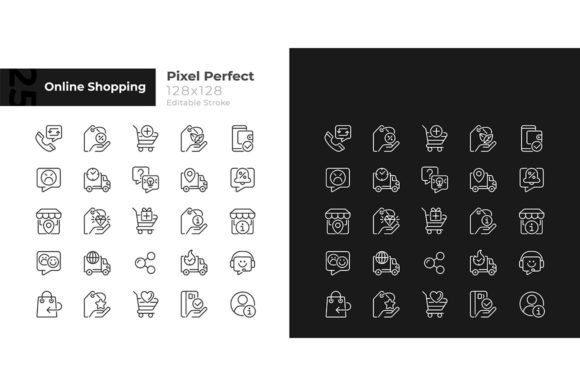
Pixel Perfect Icons for Modern Online Shopping Interfaces
If you've ever designed an e-commerce website or app, you know the struggle of finding icons that actually look crisp across every screen size. Blurry symbols on retina displays, inconsistent stroke weights between shopping carts and heart icons, or graphics that clash with your carefully chosen color palette—these small details can undermine an otherwise polished design. That's where a thoughtfully crafted icon set like the Online Shopping Pixel Perfect Icon Set becomes genuinely useful, not just as another design asset but as a practical toolkit that solves real visual problems in digital commerce projects.
Why Pixel Precision Matters in E-Commerce Design
When a customer lands on your product page, their eyes scan for familiar visual cues before reading a single word. They look for the cart icon to check their selections, the search symbol to find specific items, the wishlist heart to save favorites, and the user profile silhouette to access their account. These micro-interactions shape how trustworthy and professional your store feels. A pixel-perfect icon set ensures every one of these symbols renders sharply on standard displays and high-resolution screens alike, which directly impacts user confidence and conversion rates.
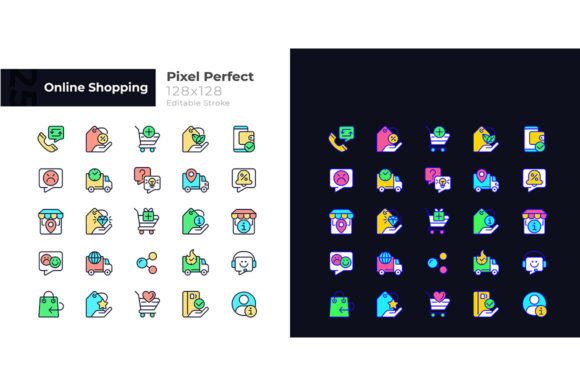
The Online Shopping Pixel Perfect Icon Set addresses this with symbols designed on a precise grid, meaning each icon aligns cleanly to pixel boundaries. No fuzzy edges, no awkward anti-aliasing artifacts. Whether you're building a minimalist Shopify storefront, designing a mobile checkout flow, or creating marketing materials for a product launch, these icons maintain their clarity at any size. The set covers the essential vocabulary of online retail—shopping bags, credit cards, delivery trucks, price tags, discount badges, review stars, and dozens more—all rendered with consistent visual weight.
Adapting to Dark and Light Interfaces
One of the more practical features of this collection is its dual-mode design. The icons come prepared for both dark and light themes, which matters more than most people realize. A thin-line shopping cart icon that looks elegant on a white background can nearly disappear on a dark navy interface. Conversely, a symbol optimized for dark mode might feel too heavy or stark against a light pastel background.
Having isolated illustrations built for night and day themes means you don't need to manually adjust stroke weights, swap fills for outlines, or redraw elements when switching between interface modes. This is particularly valuable for brands that offer dark mode toggles on their websites or for designers creating social media graphics that need to work against varied background colors. The editable stroke feature adds another layer of flexibility—you can adjust line thickness to match your specific design system without compromising the icon's proportions or readability.
Practical Applications Beyond the Website Header
Most people think of icons as navigation elements, but a well-organized set like this extends far beyond that. Consider how these symbols could serve a small business owner creating product packaging for an artisan candle brand. The delivery truck icon works beautifully on shipping labels. The percentage badge becomes part of a seasonal sale sticker. The gift icon enhances wrapping tissue paper or thank-you cards tucked into orders.
For content creators and bloggers in the lifestyle, fashion, or tech space, these icons elevate editorial layouts without requiring custom illustration work. A food blogger reviewing kitchen gadgets could use the star rating icons in product comparison graphics. A travel blogger might incorporate the luggage and compass symbols into itinerary infographics. The consistency across the entire set means mixing and matching icons within a single project feels cohesive rather than patchwork.
Social media marketers benefit significantly from having access to clean, scalable vector icons in formats like SVG and EPS. Creating Instagram Stories highlight covers with shopping bag and tag icons, designing Pinterest pins with consistent visual markers, or building Facebook ad templates with recognizable e-commerce symbols—all of these become faster and more polished when you're working from a unified icon library rather than pulling mismatched graphics from different sources.
File Formats That Actually Work for Real Projects
The practical value of any design asset often comes down to file compatibility. This icon set ships in EPS, SVG, PNG, JPEG, and AI formats, which covers the majority of professional design workflows. SVG files are ideal for web development because they scale infinitely without quality loss and can be styled with CSS. EPS and AI files work seamlessly in Adobe Illustrator for designers who need to customize paths, adjust colors, or incorporate icons into larger compositions. PNG files with transparent backgrounds are ready for quick placement in Canva, Figma, or presentation software, while JPEG versions work well for email campaigns or platforms that don't support transparency.
For entrepreneurs who aren't professional designers but need to maintain a polished brand presence, having PNG versions at multiple sizes means you can drop these icons directly into newsletter templates, invoice designs, or social media posts without opening a design application. The Quicksand-Light typeface paired with the set provides a friendly, modern aesthetic that complements the icon style, particularly useful when you need accompanying text labels or micro-copy near the symbols.
Building Visual Consistency Across Touchpoints
Brand recognition relies heavily on visual consistency. When a customer sees your Instagram post, visits your website, opens your email, and receives your package, the visual language should feel connected. Using the same icon family across all these touchpoints creates that subtle but powerful sense of cohesion. The thin-line style of this particular set strikes a balance between contemporary minimalism and approachable warmth—it doesn't feel sterile or overly corporate, which makes it suitable for boutique brands, independent creators, and growing e-commerce businesses alike.
Think about how your packaging design, website navigation, social media graphics, and marketing emails could share the same visual vocabulary. A consistent icon style across these channels reinforces professionalism and helps customers intuitively understand your interface, whether they're browsing on mobile during a commute or shopping on a desktop at home.
Choosing the Right Style for Your Project
Not every icon set suits every brand. A luxury jewelry brand might prefer ultra-thin, delicate line work, while a children's toy store needs something bolder and friendlier. Before committing to any icon library, consider your brand's personality, your target audience's expectations, and the technical context where the icons will appear. Test how symbols look at their smallest intended size—typically around 16 to 24 pixels for web navigation—and at larger display sizes used in hero sections or print materials.
Pairing icons with your existing typography also deserves attention. The clean, geometric quality of pixel-perfect line icons tends to work well with modern sans-serif fonts but can also provide an interesting contrast with serif typefaces in editorial contexts. Experiment with combinations in your actual project files rather than relying on preview mockups, because real-world context often reveals pairing issues that isolated previews miss.
The Online Shopping Pixel Perfect Icon Set from BSD Studio offers a practical foundation for anyone working in digital commerce design, whether you're refreshing a Shopify theme, building a brand from scratch, or creating marketing collateral for a product launch. With new topics and design resources released weekly, subscribing to BSD Studio keeps your creative toolkit current without the constant search for quality assets.